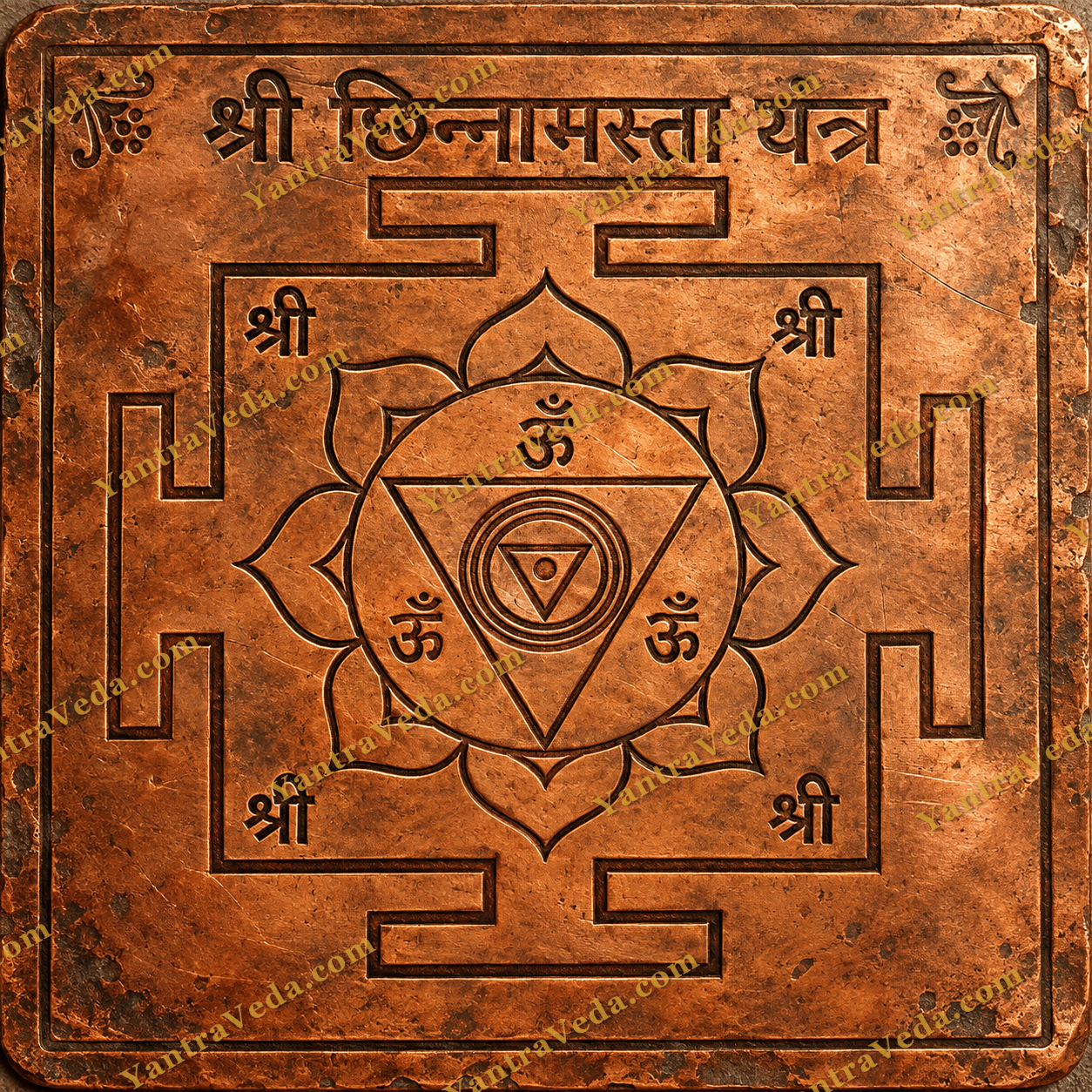
Chhinnamasta Yantra
Canonical Attributes & Classification
100 Categories Complete Digital Collection
E-Books, yantra plates, and mobile posters — all in one collection.
One-Time Payment • Digital Download
Traditional Significance & Overview
Depicting the self-decapitated goddess, this powerful Mahavidya symbolizes the severance of mind-bound identification with the transient mortal body.
Metaphysical Symbolism & Geometry
Interlocking triangles of fire and water depicting the transcendence of dualities and mastery of kundalini energy.
Central esoteric yoni-triangle, intersecting inverted triangles, surrounded by circular boundary and four-directional Bhupura.
Traditional Method of Use
Strictly an esoteric contemplative symbol; not suited for casual domestic ritual.
Traditional Placement & Direction
Private monastic or advanced yogic meditation sanctuary.
Traditional Precautions & Respect
Requires psychological stability and deep emotional maturity. Not a talisman for worldly gain.
When Teacher Guidance is Recommended: Highly Recommended. Practice without initiation is discouraged in traditional texts.
Scriptural References & Scholarly Sources
- Tantraraja Tantra by Sir John Woodroffe (Arthur Avalon) & Mahamahopadhyaya Lakshmana Shastri (1918 / 1981, Ganesh & Co. / Tantrik Texts Series).
- Mantra Mahodadhi of Mahidhara by Mahidhara (Annotated by Board of Scholars) (1984 reprint, Sri Satguru Publications / Motilal Banarsidass).
Yantras and sacred geometric diagrams are presented as traditional Hindu spiritual heritage and contemplative symbols. They do not constitute medical, clinical, or financial advice and offer no guaranteed financial or medical outcomes.