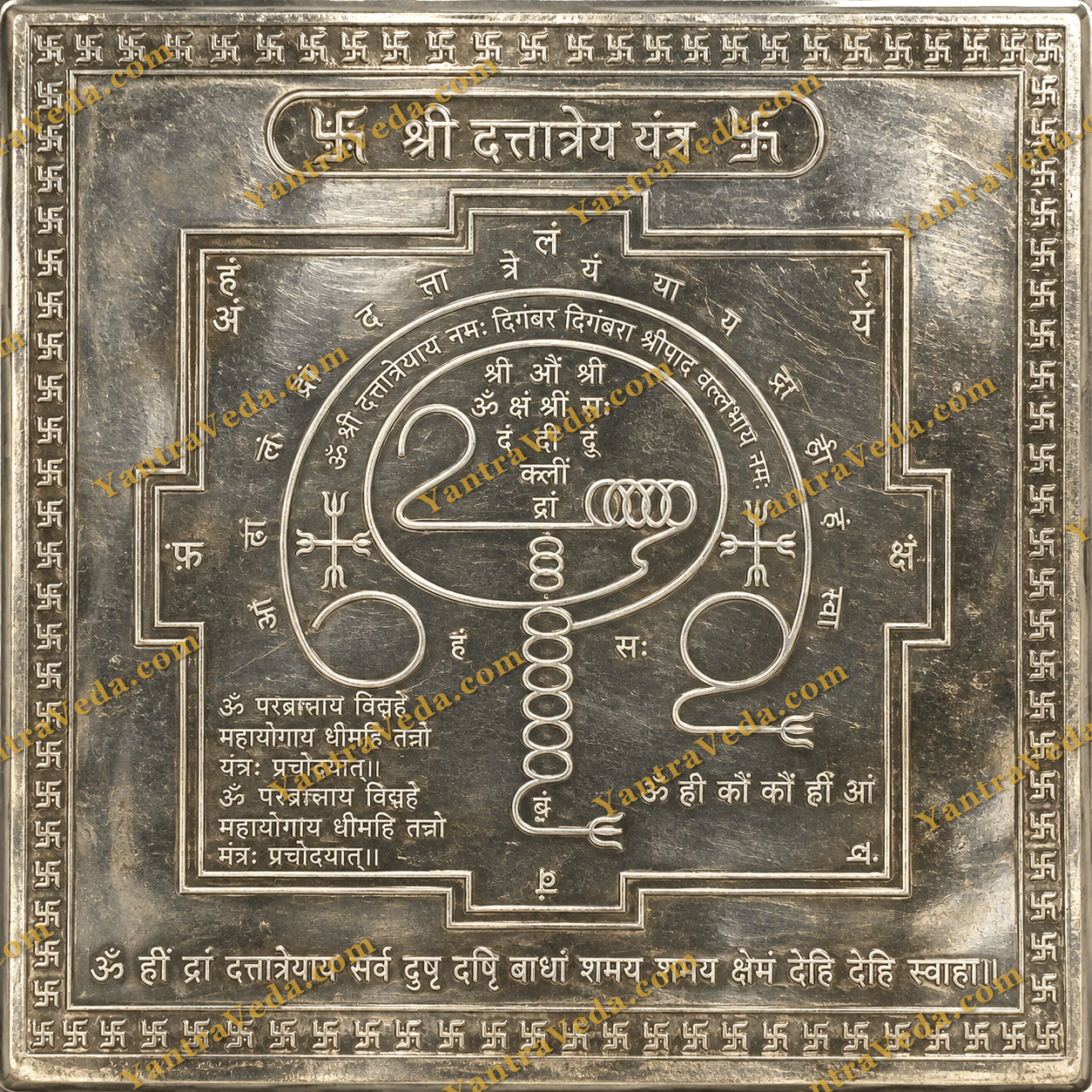
Dattatreya Yantra
Canonical Attributes & Classification
100 Categories Complete Digital Collection
E-Books, yantra plates, and mobile posters — all in one collection.
One-Time Payment • Digital Download
Traditional Significance & Overview
The Kartikeya (Subrahmanya) Yantra represents Lord Murugan, commander of the divine army who defeated the demon Soorapadman. Symbolizes supreme spiritual valor and conquest of internal vices.
Metaphysical Symbolism & Geometry
A six-pointed hexagram and six outer petals representing the six spiritual chakras and victory over sensory distraction.
Sacred trinity mandala featuring central Bindu, trinity triangle, surrounding 8-petaled lotus, and four-portal Vedic enclosure.
Traditional Method of Use
Worshiped during Skanda Sashti and Tuesdays with red flowers and silent contemplation on courage.
Traditional Placement & Direction
Clean prayer sanctum, home altar, or quiet meditation corner.
Traditional Precautions & Respect
Maintain cleanliness and respect around the sacred geometry. Meditative focus should be grounded in patience and ethical conduct.
When Teacher Guidance is Recommended: Advanced ritual procedures, prolonged mantra vows (anushthanas), and tantric rites should only be performed with authentic guidance from a qualified traditional teacher.
Scriptural References & Scholarly Sources
- Prapanchasara Tantra by Attributed to Adi Shankaracharya (Ed. Arthur Avalon) (1935, Agamanusandhana Samiti, Calcutta).
- Sharada Tilaka Tantram by Lakshmana Deshikendra (Comm. by Raghavabhatta) (1963, Chowkhamba Sanskrit Series Office, Varanasi).
Yantras and sacred geometric diagrams are presented as traditional Hindu spiritual heritage and contemplative symbols. They do not constitute medical, clinical, or financial advice and offer no guaranteed financial or medical outcomes.