
Dhumavati Yantra
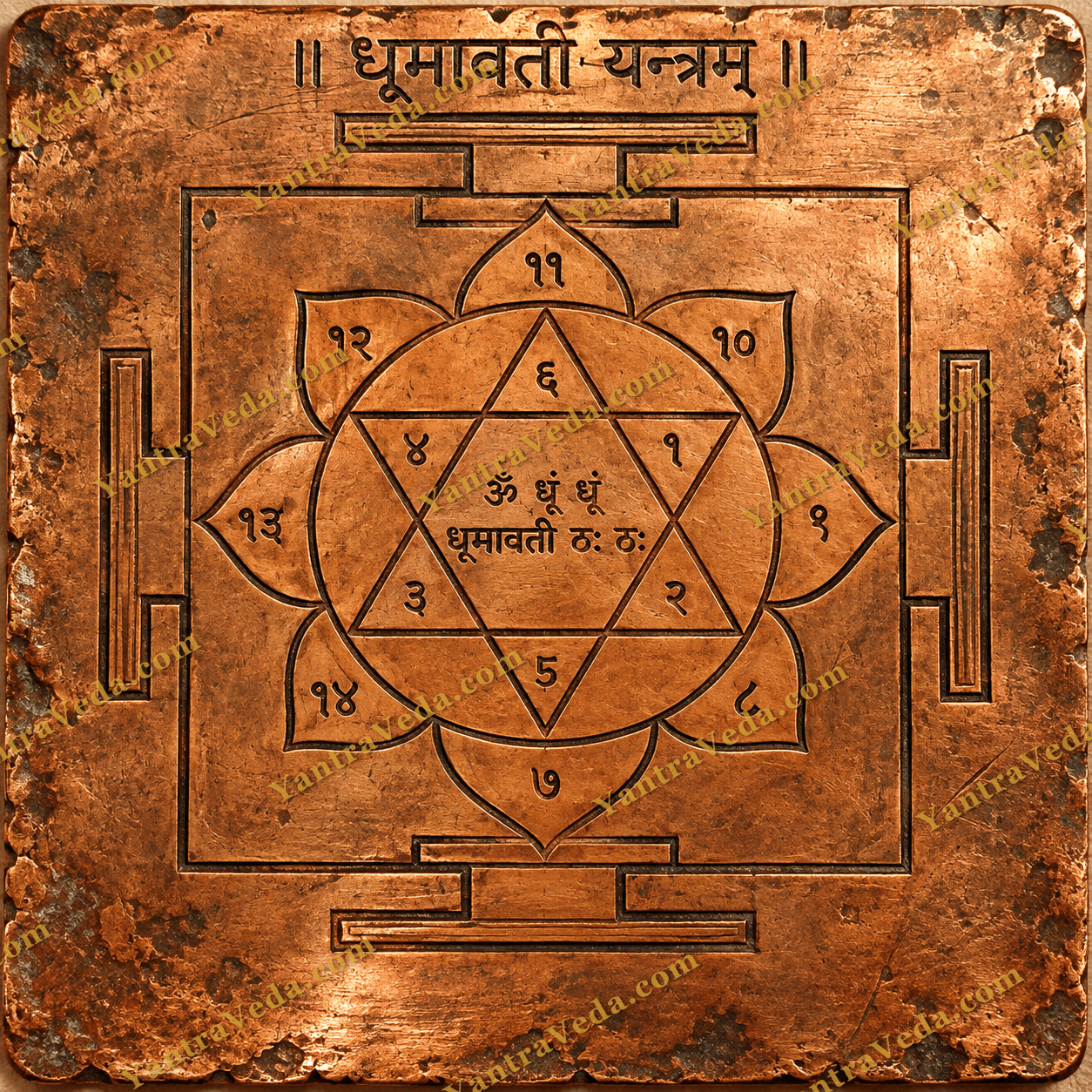
Canonical Attributes & Classification
100 Categories Complete Digital Collection
E-Books, yantra plates, and mobile posters — all in one collection.
One-Time Payment • Digital Download
Traditional Significance & Overview
Depicting the widowed, smoky elder aspect of the Mother, Dhumavati represents the void before creation and after cosmic dissolution. She grants profound solace to the suffering.
Metaphysical Symbolism & Geometry
Minimalist austere geometry representing cessation of worldly desire and total resting of the mind in unconditioned reality.
Solitary central triangle within an ascetic circular frame, surrounded by simple unadorned boundaries reflecting non-attachment.
Traditional Method of Use
Approached strictly in quiet personal contemplation; traditionally associated with renunciation rather than household accumulation.
Traditional Placement & Direction
Secluded meditation room or spiritual library.
Traditional Precautions & Respect
Traditional guidelines advise against placing this yantra in general lively living quarters without monastic guidance.
When Teacher Guidance is Recommended: Highly Recommended. Guru guidance is customary for Dhumavati sadhana.
Scriptural References & Scholarly Sources
- Mantra Mahodadhi of Mahidhara by Mahidhara (Annotated by Board of Scholars) (1984 reprint, Sri Satguru Publications / Motilal Banarsidass).
- Sharada Tilaka Tantram by Lakshmana Deshikendra (Comm. by Raghavabhatta) (1963, Chowkhamba Sanskrit Series Office, Varanasi).
Yantras and sacred geometric diagrams are presented as traditional Hindu spiritual heritage and contemplative symbols. They do not constitute medical, clinical, or financial advice and offer no guaranteed financial or medical outcomes.