Mangal Yantra
Canonical Attributes & Classification
100 Categories Complete Digital Collection
E-Books, yantra plates, and mobile posters — all in one collection.
One-Time Payment • Digital Download
Traditional Significance & Overview
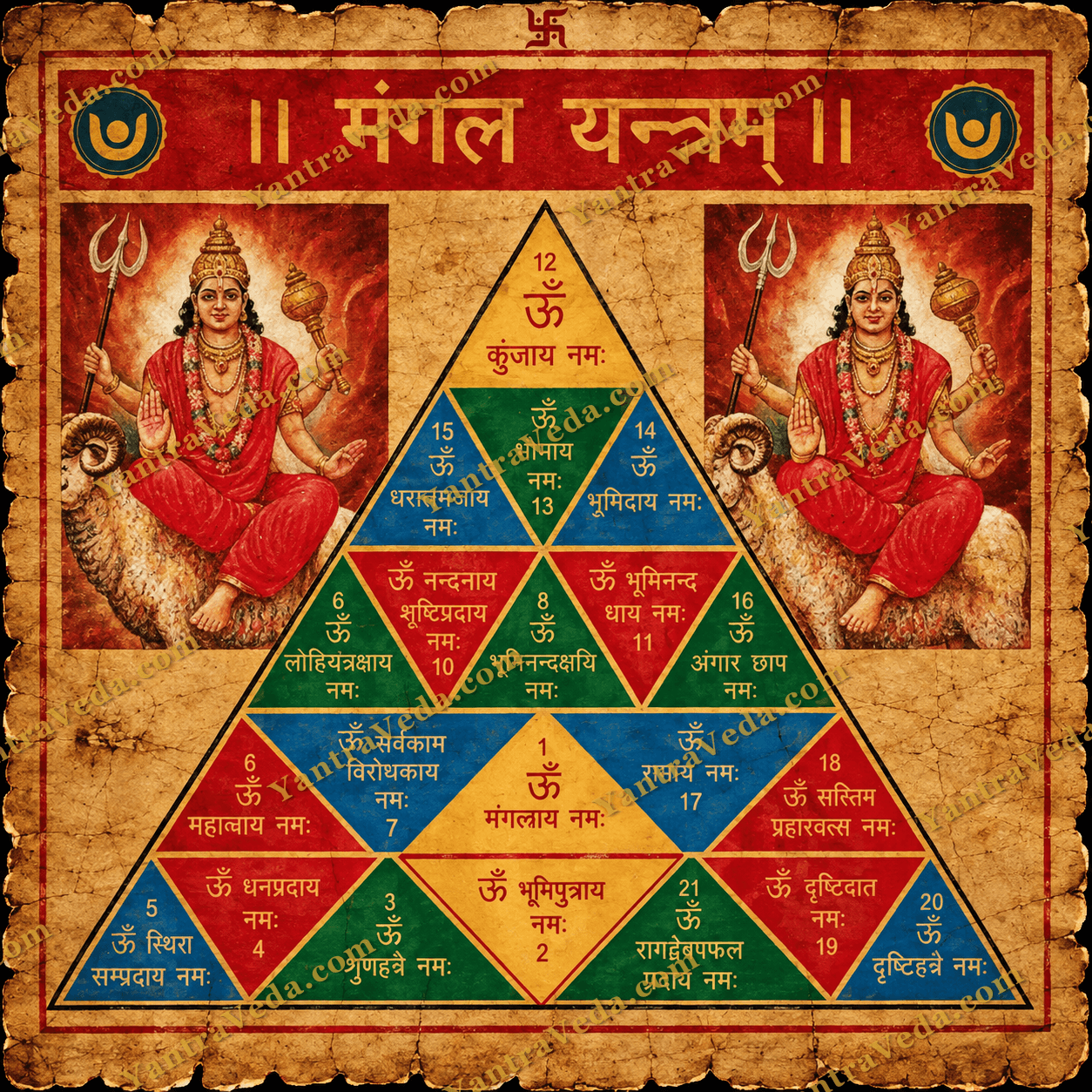
The Mangal Yantra is a revered traditional sacred geometry dedicated to Mangala / Angaraka (Mars). In Hindu spiritual heritage, it functions as a visual representation of cosmic principles, helping practitioners center their attention during quiet reflection and devotional prayer.
Metaphysical Symbolism & Geometry
The structural geometry balances masculine and feminine cosmic forces, utilizing traditional symmetry to inspire mental calm and spiritual equilibrium.
Classical 3x3 martial numerical grid summing to 21, surrounded by upward fire-triangles and robust boundary.
Traditional Method of Use
Traditionally placed on a clean prayer altar; observed with a calm mind, lighted lamp (deepa), and quiet chanting of the associated mantra.
Traditional Placement & Direction
Clean prayer sanctum, home altar, or quiet meditation corner.
Traditional Precautions & Respect
Maintain cleanliness and respect around the sacred geometry. Meditative focus should be grounded in patience and ethical conduct.
When Teacher Guidance is Recommended: Advanced ritual procedures, prolonged mantra vows (anushthanas), and tantric rites should only be performed with authentic guidance from a qualified traditional teacher.
Scriptural References & Scholarly Sources
- Mantra Mahodadhi of Mahidhara by Mahidhara (Annotated by Board of Scholars) (1984 reprint, Sri Satguru Publications / Motilal Banarsidass).
- Brihat Parashara Hora Shastra by Sage Parashara (Trans. R. Santhanam) (1984, Ranjan Publications, New Delhi).
Yantras and sacred geometric diagrams are presented as traditional Hindu spiritual heritage and contemplative symbols. They do not constitute medical, clinical, or financial advice and offer no guaranteed financial or medical outcomes.