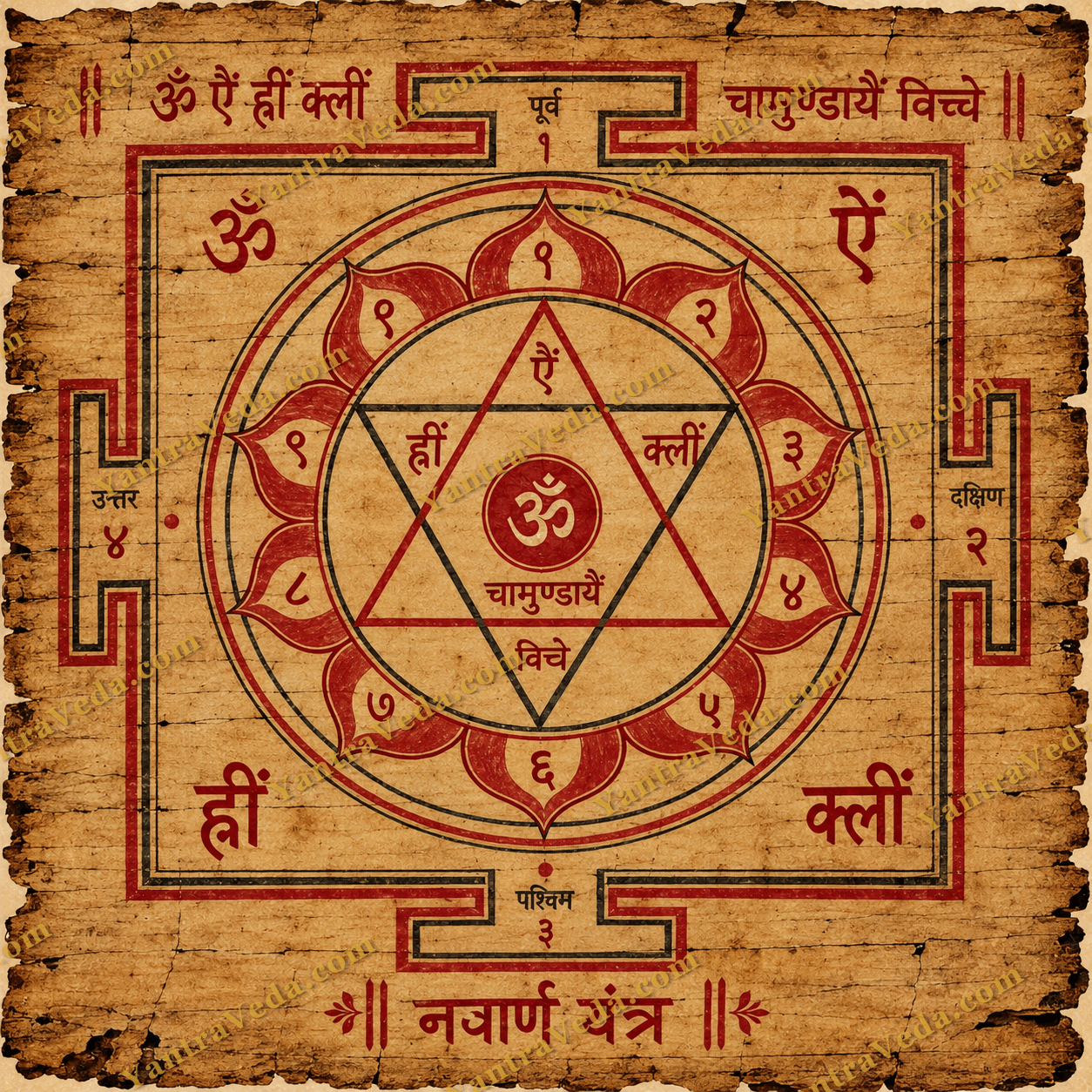
Navarna Yantra
Canonical Attributes & Classification
100 Categories Complete Digital Collection
E-Books, yantra plates, and mobile posters — all in one collection.
One-Time Payment • Digital Download
Traditional Significance & Overview
The Ashta Lakshmi Yantra integrates the eight sacred dimensions of Lakshmi celebrated in Hindu culture: Adi (primordial), Dhanya (agricultural sustenance), Dhairya (patience), Gaja (majesty), Santana (lineage), Vijaya (perseverance), Vidya (knowledge), and Dhana (ethical wealth).
Metaphysical Symbolism & Geometry
An 8-petaled lotus where each petal represents one of the eight Lakshmis radiating from the central Bindu of divine grace.
Sacred 9-syllable geometric wheel with central Bindu, 9 interlocking angles, concentric circles, and defensive square citadel.
Traditional Method of Use
Revered in family altars and businesses with gratitude and sharing of gifts on Fridays and Diwali.
Traditional Placement & Direction
Clean prayer sanctum, home altar, or quiet meditation corner.
Traditional Precautions & Respect
Maintain cleanliness and respect around the sacred geometry. Meditative focus should be grounded in patience and ethical conduct.
When Teacher Guidance is Recommended: Advanced ritual procedures, prolonged mantra vows (anushthanas), and tantric rites should only be performed with authentic guidance from a qualified traditional teacher.
Scriptural References & Scholarly Sources
- Mantra Mahodadhi of Mahidhara by Mahidhara (Annotated by Board of Scholars) (1984 reprint, Sri Satguru Publications / Motilal Banarsidass).
- Sharada Tilaka Tantram by Lakshmana Deshikendra (Comm. by Raghavabhatta) (1963, Chowkhamba Sanskrit Series Office, Varanasi).
Yantras and sacred geometric diagrams are presented as traditional Hindu spiritual heritage and contemplative symbols. They do not constitute medical, clinical, or financial advice and offer no guaranteed financial or medical outcomes.