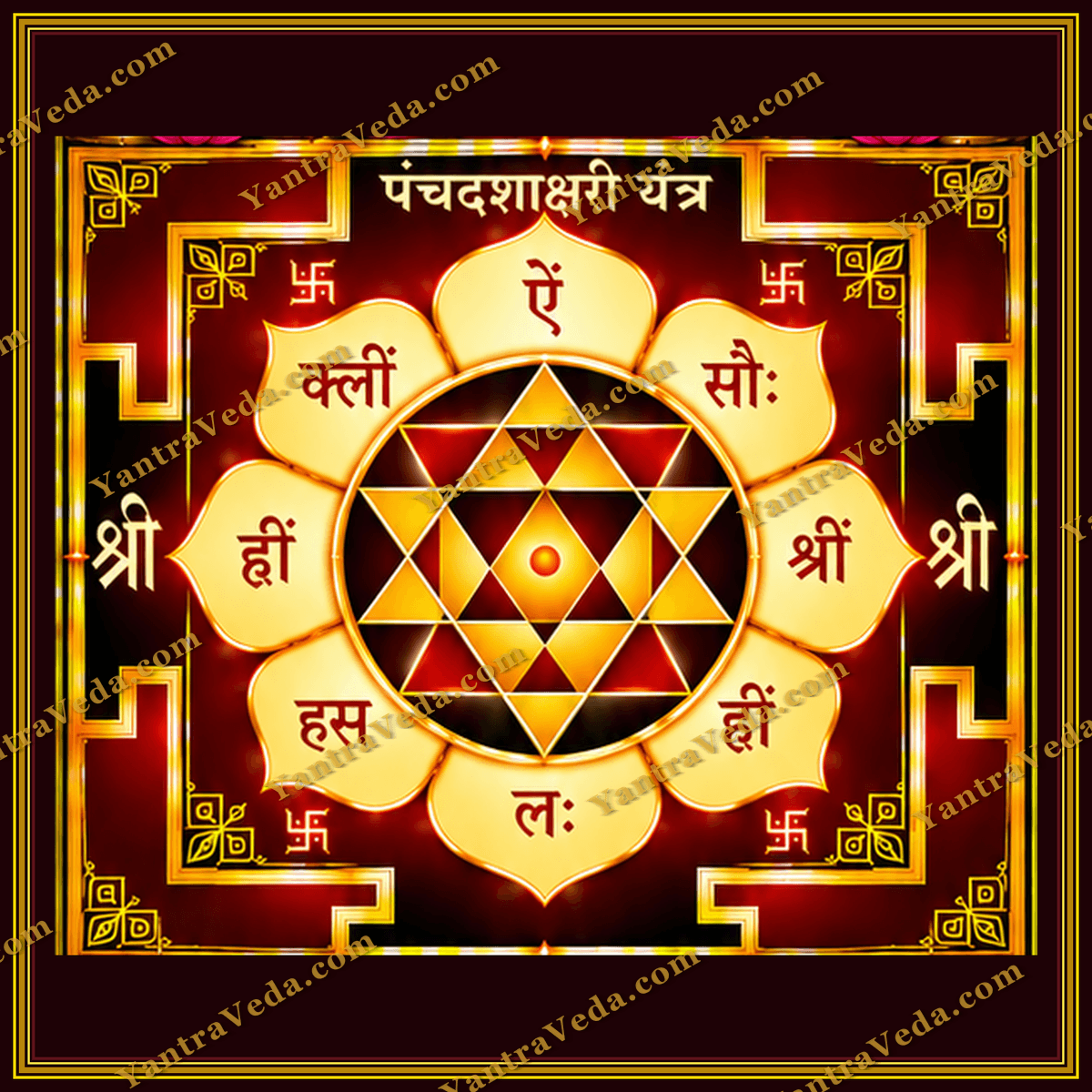
Panchadashakshari Yantra
Canonical Attributes & Classification
100 Categories Complete Digital Collection
E-Books, yantra plates, and mobile posters — all in one collection.
One-Time Payment • Digital Download
Traditional Significance & Overview
Encapsulates the revered 15-letter mantra of Shri Vidya, partitioned into three sacred kutas (Vagbhava, Kamaraja, and Shakti).
Metaphysical Symbolism & Geometry
Tri-fold creation, preservation, and dissolution resolved into ultimate transcendental unity.
Esoteric Shri Vidya geometric core centered on the supreme Bindu, enclosed in 3 progressive geometric folds and sacred Sri Chakra perimeter.
Traditional Method of Use
Reserved for qualified initiates in Shri Vidya; studied by scholars for its remarkable geometric symmetry.
Traditional Placement & Direction
Inner sanctuary or personal study.
Traditional Precautions & Respect
Strictly devotional and scholarly study recommended for uninitiated readers.
When Teacher Guidance is Recommended: Essential. This practice is universally guarded by traditional lineage protocols.
Scriptural References & Scholarly Sources
- Tantraraja Tantra by Sir John Woodroffe (Arthur Avalon) & Mahamahopadhyaya Lakshmana Shastri (1918 / 1981, Ganesh & Co. / Tantrik Texts Series).
- Saundarya Lahari of Sri Sankaracarya by Adi Shankaracharya (Translation and commentary by Swami Tapasyananda) (1977, Sri Ramakrishna Math, Chennai).
Yantras and sacred geometric diagrams are presented as traditional Hindu spiritual heritage and contemplative symbols. They do not constitute medical, clinical, or financial advice and offer no guaranteed financial or medical outcomes.