
Shodashi Yantra
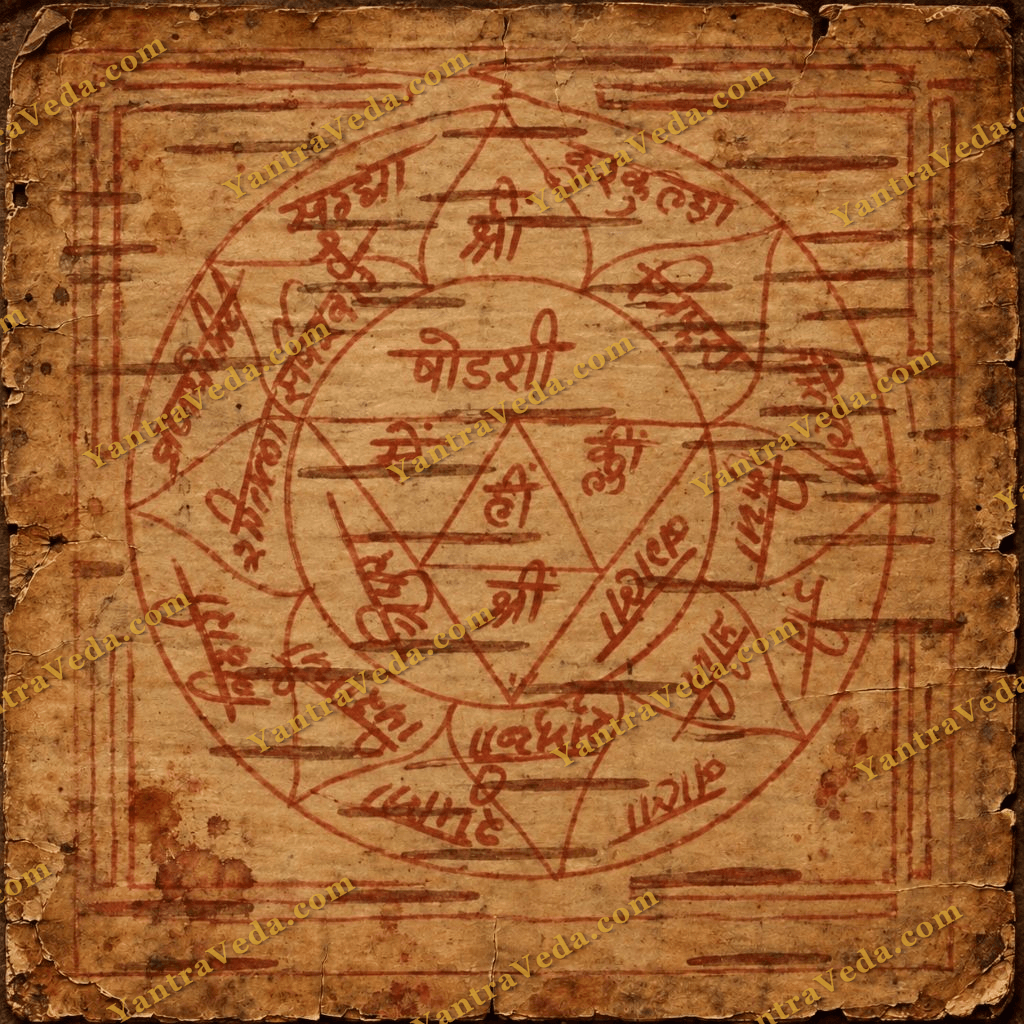
Canonical Attributes & Classification
100 Categories Complete Digital Collection
E-Books, yantra plates, and mobile posters — all in one collection.
One-Time Payment • Digital Download
Traditional Significance & Overview
Shodashi represents the third of the Ten Mahavidyas, symbolizing perfection, youthfulness of consciousness, and sixteen divine kalas (facets) of reality.
Metaphysical Symbolism & Geometry
Sixteen lotus petals representing the sixteen kalas of the moon and inner sensory mastery.
Supreme Sri Vidya mandala with central Bindu of the 16th lunar digit, 9 interlocking triangles, 16 lotus petals, and fortified Bhupura.
Traditional Method of Use
Used in advanced Shakta contemplation; general practitioners revere the visual form with light and incense.
Traditional Placement & Direction
Private sanctum or dedicated spiritual corner.
Traditional Precautions & Respect
Avoid attempting complex esoteric rituals without traditional initiation.
When Teacher Guidance is Recommended: Required for complete 16-syllable mantra sadhana.
Scriptural References & Scholarly Sources
- Tantraraja Tantra by Sir John Woodroffe (Arthur Avalon) & Mahamahopadhyaya Lakshmana Shastri (1918 / 1981, Ganesh & Co. / Tantrik Texts Series).
- Saundarya Lahari of Sri Sankaracarya by Adi Shankaracharya (Translation and commentary by Swami Tapasyananda) (1977, Sri Ramakrishna Math, Chennai).
Yantras and sacred geometric diagrams are presented as traditional Hindu spiritual heritage and contemplative symbols. They do not constitute medical, clinical, or financial advice and offer no guaranteed financial or medical outcomes.