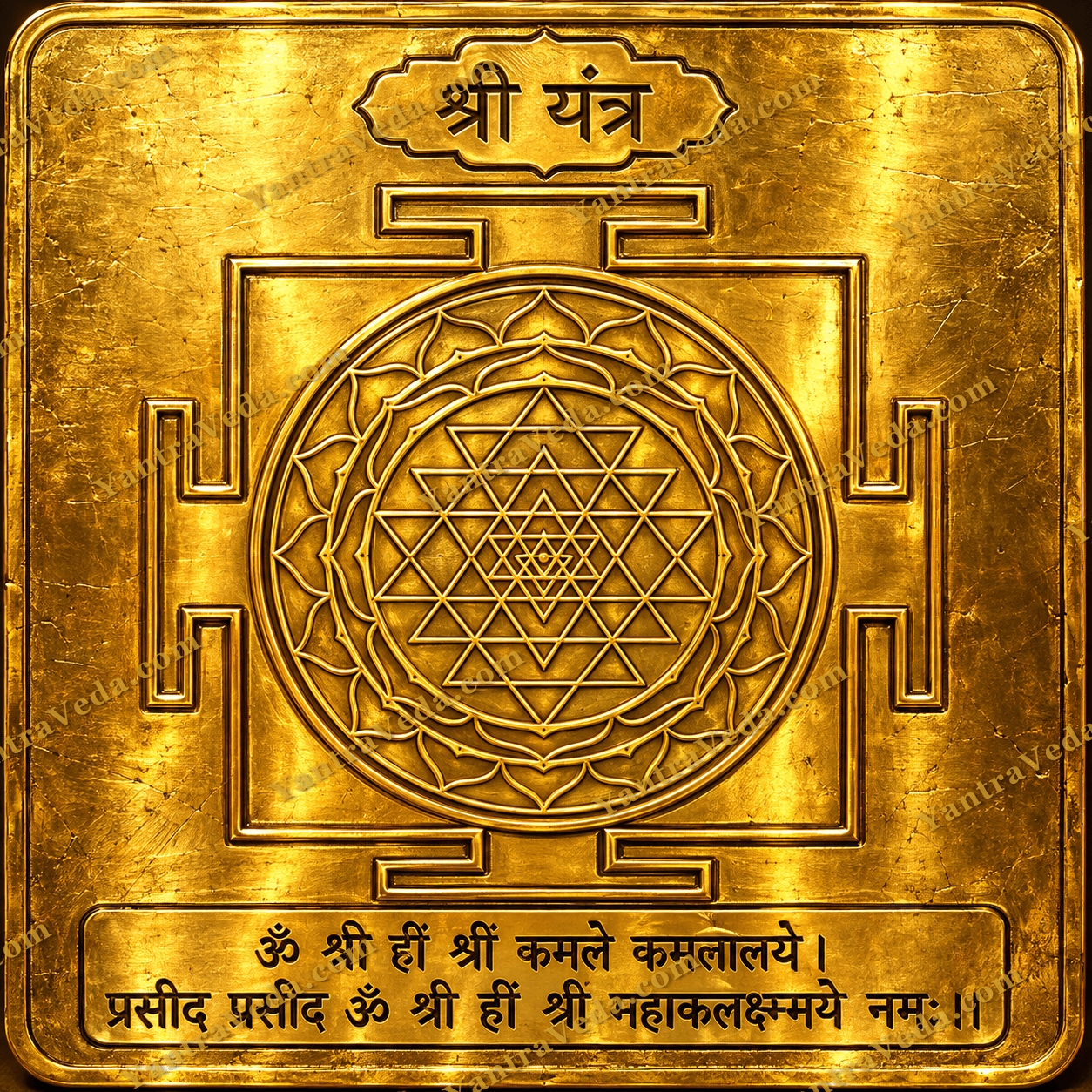
Shri Yantra
Canonical Attributes & Classification
100 Categories Complete Digital Collection
E-Books, yantra plates, and mobile posters — all in one collection.
One-Time Payment • Digital Download
Traditional Significance & Overview
The Shri Yantra is regarded in Shakta philosophy as the queen of all yantras (Yantraraja). It represents the cosmic order, the manifestation of consciousness from the unmanifest center (Bindu) into the physical universe.
Metaphysical Symbolism & Geometry
Composed of nine interlocking triangles centered around a holy Bindu, surrounded by concentric lotus circles and an outer four-gated earth citadel (Bhupura). Four triangles point upward (Shiva/Cosmic Consciousness) and five downward (Shakti/Dynamic Energy).
Central Bindu, 9 interlocking triangles generating 43 smaller triangles, 8-petal inner lotus, 16-petal outer lotus, 3 concentric circles (Mekhala), 3-tiered outer square with 4 cardinal T-shaped portals (Bhupura).
Traditional Method of Use
Traditionally installed on an elevated altar facing East or North; approached through quiet contemplation, sacred offerings, and Sri Sukta recitation.
Traditional Placement & Direction
Meditation room, dedicated puja altar, or quiet study space.
Traditional Precautions & Respect
Maintain cleanliness and respect around the geometry. Avoid treating it as a transactional good-luck charm; traditional lineages emphasize inner reverence.
When Teacher Guidance is Recommended: Initiation into advanced Navavarana Puja and Panchadashakshari mantra recitation should be undertaken under the guidance of an authentic Shri Vidya lineage guru.
Scriptural References & Scholarly Sources
- Tantraraja Tantra by Sir John Woodroffe (Arthur Avalon) & Mahamahopadhyaya Lakshmana Shastri (1918 / 1981, Ganesh & Co. / Tantrik Texts Series).
- Saundarya Lahari of Sri Sankaracarya by Adi Shankaracharya (Translation and commentary by Swami Tapasyananda) (1977, Sri Ramakrishna Math, Chennai).
- Yantra: The Tantric Symbol of Cosmic Unity by Madhu Khanna (1979, Thames and Hudson, London).
Yantras and sacred geometric diagrams are presented as traditional Hindu spiritual heritage and contemplative symbols. They do not constitute medical, clinical, or financial advice and offer no guaranteed financial or medical outcomes.