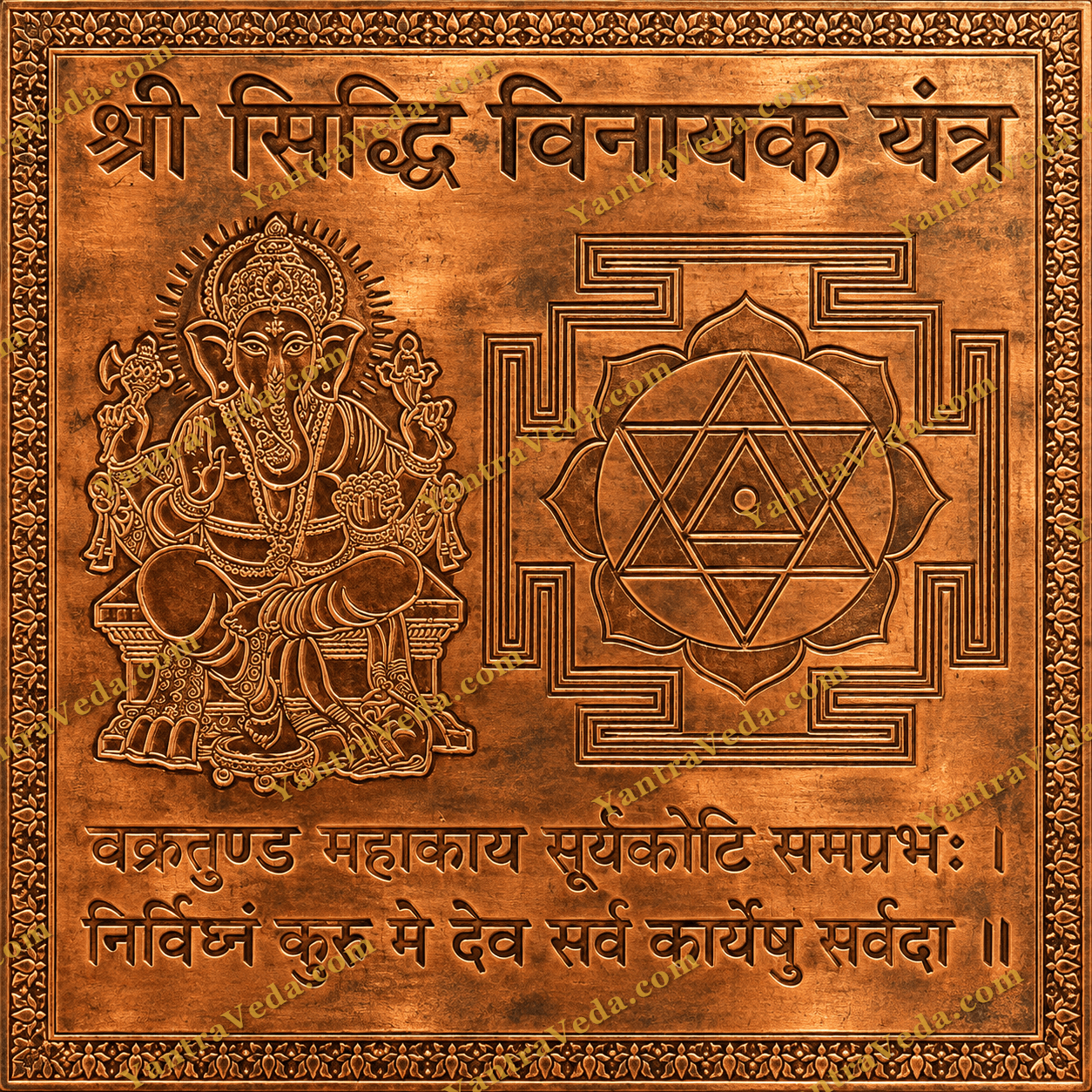
Siddhivinayak Yantra
Canonical Attributes & Classification
100 Categories Complete Digital Collection
E-Books, yantra plates, and mobile posters — all in one collection.
One-Time Payment • Digital Download
Traditional Significance & Overview
The Kali Yantra represents the first of the Ten Mahavidyas, personifying Kala (Time) and cosmic dissolution of illusion. It teaches radical surrender and courage.
Metaphysical Symbolism & Geometry
Five concentric downward-pointing triangles representing the five koshas (sheaths of consciousness) and five elements (Pancha Mahabhutas).
Sacred geometric mandala with central Bindu, energized Shatkona, 8 petals representing the Ashta Siddhis, and protective solar boundary.
Traditional Method of Use
Meditated upon in a clean, quiet space at dusk or night with single-pointed focus on inner detachment.
Traditional Placement & Direction
Meditation room or secluded altar.
Traditional Precautions & Respect
Avoid aggressive or anger-driven mindsets during meditation; approach with deep humility and reverence.
When Teacher Guidance is Recommended: Strictly recommended for nocturnal (Nisha) sadhanas and bija japa repetitions.
Scriptural References & Scholarly Sources
- Mantra Mahodadhi of Mahidhara by Mahidhara (Annotated by Board of Scholars) (1984 reprint, Sri Satguru Publications / Motilal Banarsidass).
- Sharada Tilaka Tantram by Lakshmana Deshikendra (Comm. by Raghavabhatta) (1963, Chowkhamba Sanskrit Series Office, Varanasi).
Yantras and sacred geometric diagrams are presented as traditional Hindu spiritual heritage and contemplative symbols. They do not constitute medical, clinical, or financial advice and offer no guaranteed financial or medical outcomes.