Tripurasundari Yantra
Canonical Attributes & Classification
100 Categories Complete Digital Collection
E-Books, yantra plates, and mobile posters — all in one collection.
One-Time Payment • Digital Download
Traditional Significance & Overview
The Durga Yantra is a revered Shakta emblem representing the invincible defensive shield of cosmic order against demonic disruption. In the Devi Mahatmya, Durga embodies the unified spiritual light of all deities.
Metaphysical Symbolism & Geometry
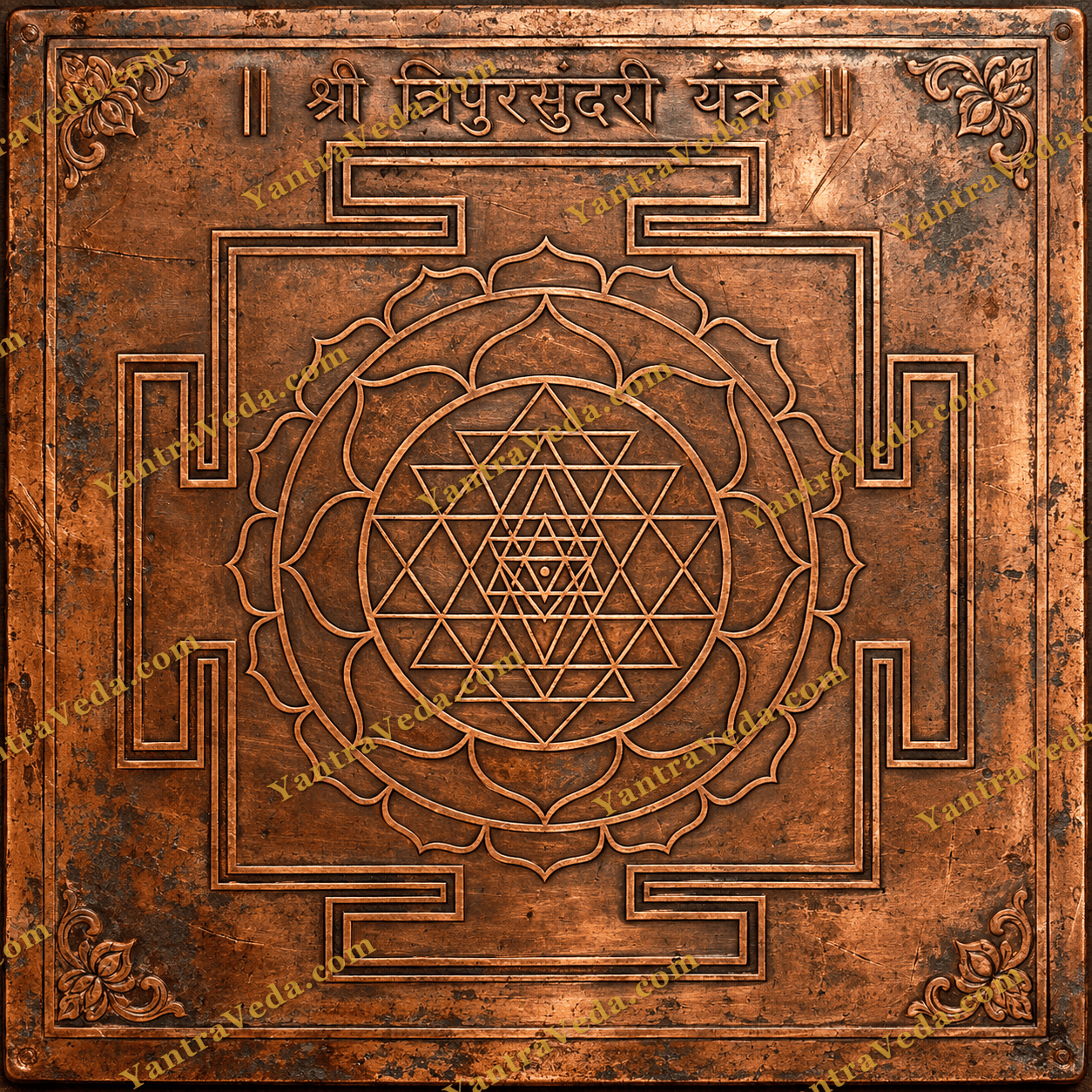
Consists of three concentric interlocking triangles forming nine triangular zones, surrounded by an 8-petal lotus and protective Bhupura, symbolizing complete mastery over the nine facets of nature.
Central Bindu, upward and downward triangles, surrounding circular lotus ring, encased in a traditional stepped square sanctuary.
Traditional Method of Use
Worshiped during Navaratri and Tuesdays with red flowers, incense, and recitation of the Durga Saptashati.
Traditional Placement & Direction
Clean prayer sanctum, home altar, or quiet meditation corner.
Traditional Precautions & Respect
Maintain cleanliness and respect around the sacred geometry. Meditative focus should be grounded in patience and ethical conduct.
When Teacher Guidance is Recommended: Advanced ritual procedures, prolonged mantra vows (anushthanas), and tantric rites should only be performed with authentic guidance from a qualified traditional teacher.
Scriptural References & Scholarly Sources
- Tantraraja Tantra by Sir John Woodroffe (Arthur Avalon) & Mahamahopadhyaya Lakshmana Shastri (1918 / 1981, Ganesh & Co. / Tantrik Texts Series).
- Saundarya Lahari of Sri Sankaracarya by Adi Shankaracharya (Translation and commentary by Swami Tapasyananda) (1977, Sri Ramakrishna Math, Chennai).
Yantras and sacred geometric diagrams are presented as traditional Hindu spiritual heritage and contemplative symbols. They do not constitute medical, clinical, or financial advice and offer no guaranteed financial or medical outcomes.